My Dad's Hummus Recipe & Other Reasons to Blog
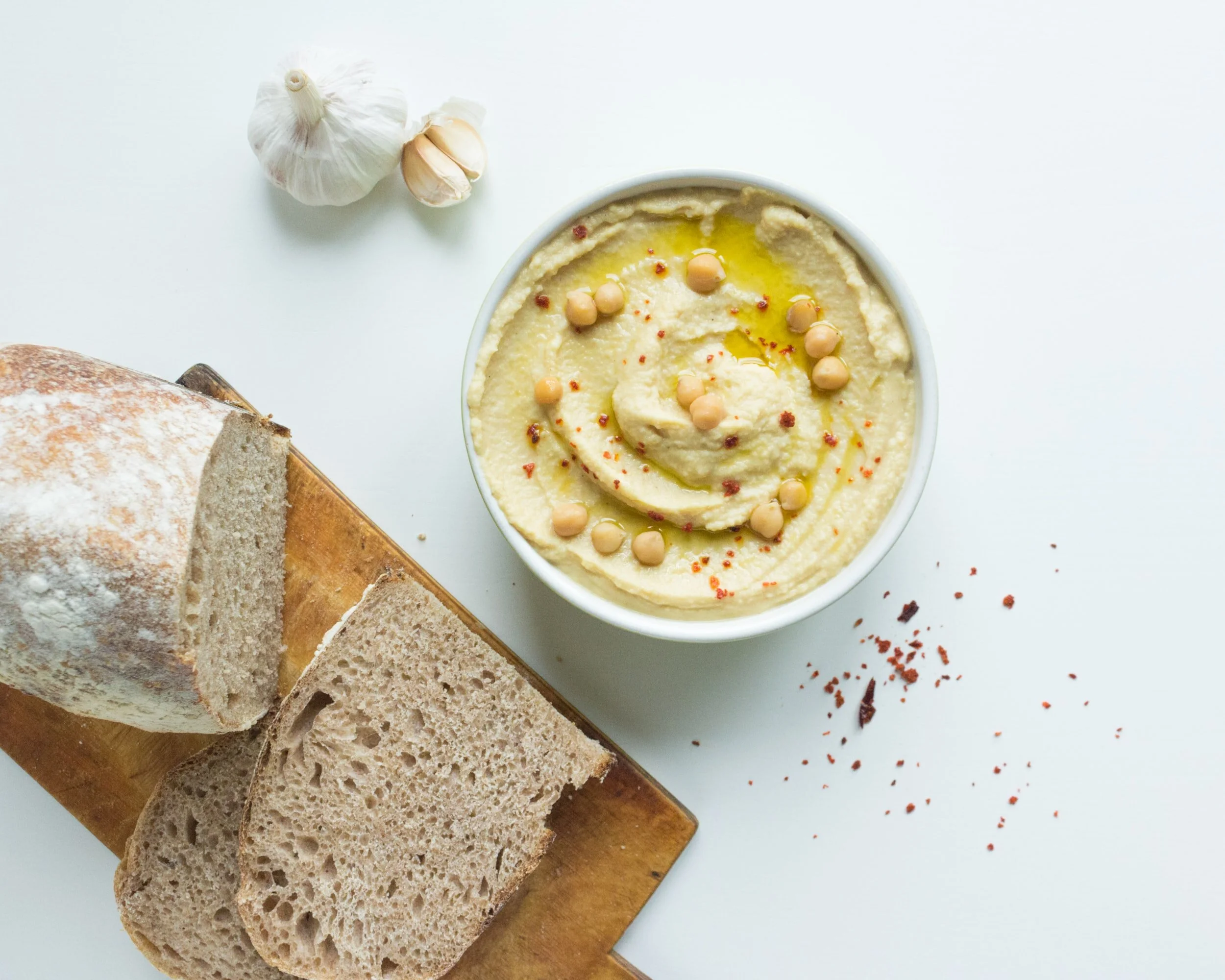
Like any good Millennial, I use Google to find recipes and how-to’s. Something that bugs me about finding recipes online is the dense block of text that so many bloggers insist upon leading their recipe with - about the changing season, and how this soup embodies all things fall, what their kids are dressing as for Halloween, or whatever. I am generally appreciative of the recipe, and I’m sure the blogging soup mom is appreciative of the fact that I spent all that time gleaning information about her life and her soup. If you made it this far, maybe the irony of this post is starting to sink in.
My Dad is a digital communications professor at Loyola University, and he has a very professional blog. Right now, his most clicked blog post is about passing the Google Analytics exam, but once upon a time his search~traffic heavy hitter was his hummus recipe. Just in case that’s what you are here for, I’ll post it now.
Best Hummus Recipe:
1 15 oz. can garbanzo beans
2-3 cloves garlic
1 teaspoon salt
½ cup tahini
½ cup fresh lemon juice
olive oil for garnish
pine nuts for garnish
paprika for garnish
Microwave beans with liquid for five minutes. Pour off liquid and reserve. Mince garlic in a food processor. Add beans and salt and pulse until smooth, about 10 times. Add tahini and lemon juice and blend. Add reserved liquid until hummus is creamy and thin.
Spoon into serving dish. Garnish with pine nuts, olive oil and paprika.
N.B. to toast pine nuts, put in dry sauce pan over medium heat, shaking steadily, until just brown (about five minutes). Allow to cool.
If my Dad’s blog is about web optimization and digital marketing, why was his hummus recipe showing up so frequently in search engines? The answer is easy. Lots of people love hummus. For example, take a look at this comparison on Google Trends.
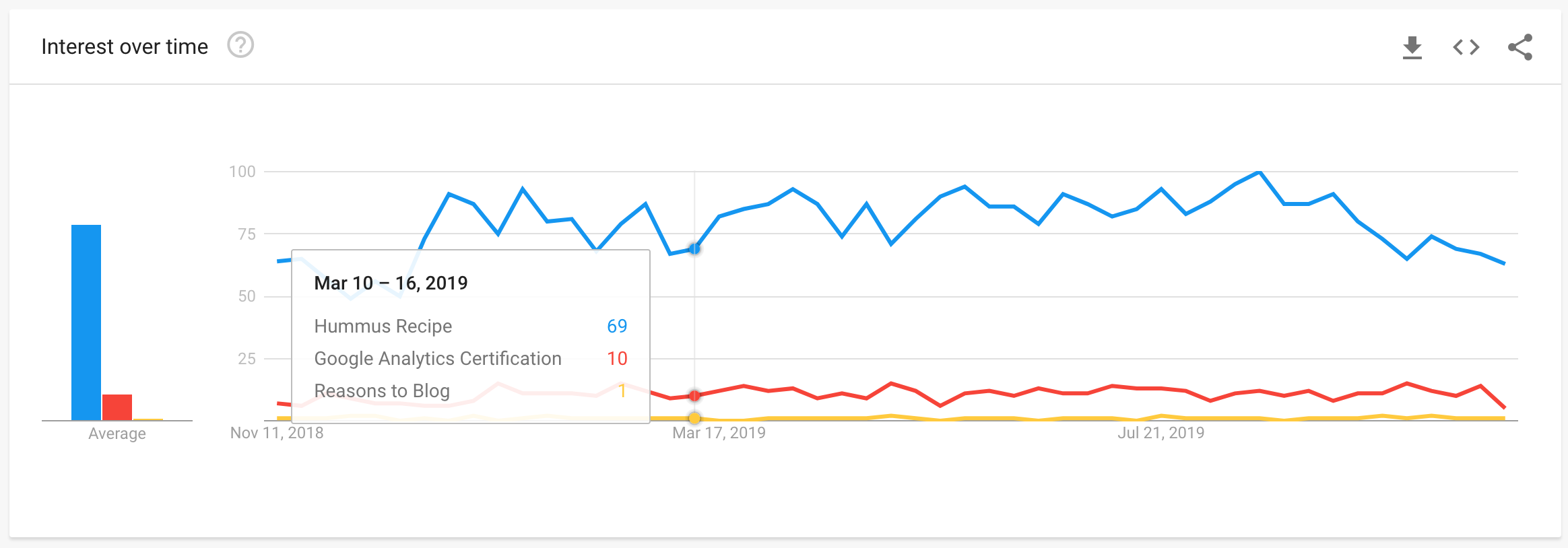
Hummus is nearly universally loved, while SEO is a much more specific search.
Once you land on a recipe for hummus on a digital marketing blog, there isn’t anywhere else to go (except your kitchen to toast pine nuts), so despite the post attracting a crowd- it really isn’t content apropos. But people searching for Analytics Certification who find your blog, well, they have a common niche interest and are likely to spend some time familiarizing themselves with your site. It also builds credibility, trust, and all the other things that we hope to gain from blogging. Which leads me to the second half of this blog post.
Reasons to Blog for your Business:
Lots of text for Google to read (or “Crawl”) Remember the soup moms? All that dense text was as much for Google as it was for you.
More inbound links that search engines can catalogue, linking directly to your site.
Owned content is the cheapest and most controlled form of marketing, you can communicate exactly what you want.
70% of consumers learn about a company through articles rather than ads.*
Small businesses with blogs generate 126% more leads.*
They create direct connections with consumers, generating trust in your brand and expertise on a subject.
Despite all this convincing stuff, blogs can still be a total drag (both as a searcher and as a blogger). Because I work almost exclusively for designers who prioritize aesthetics over all else, convincing a client that a blog is going to boost their SEO can be a hard sell. Even when a small business starts a blog, often it starts strong then after a few posts it gets put on the back burner - both of these issues I whole heartedly sympathize with.
If you relate to either of those categories above, I’d recommend the following solutions.
Don’t call it a blog, call it News. This will allow you to celebrate press exposure, as well as company accomplishments (re-branding, finished projects, new hires etc.), and you can slip in all that expert advice while simultaneously polishing the company culture of your brand. You don’t even have to put it in your menu bar as long as you link the content appropriately (I’d still put it in your footer).
Hire someone or task someone with a monthly post. Who writes the best emails in your office? Where’s your creative writing major buddy who’s always broke? Oh yeah, you can also hire me (I almost forgot).
Make your post image heavy to cure writers block. Just be sure to format what is there so Google can find it. Use H1 headings, alt captions, and outbound links to credit your image source.
And lastly, remember to add the appropriate SEO info! Catchy slug, simple url, attention grabbing meta description, awesome thumbnail photo. Otherwise what’s even the point of showing up on Google?
Ultimately, as a good Millennial I cannot deny that I look at blogs a lot. Mostly to become a better cook and a better marketer. So I leave you with this last bit of advice. Think like a searcher, and create content that mirrors the searches you want to be found for.
Oh and listen to your parents.